Z FOR ZARAFA

A solo show by Lara Baladi

2 June - 23 September 2026

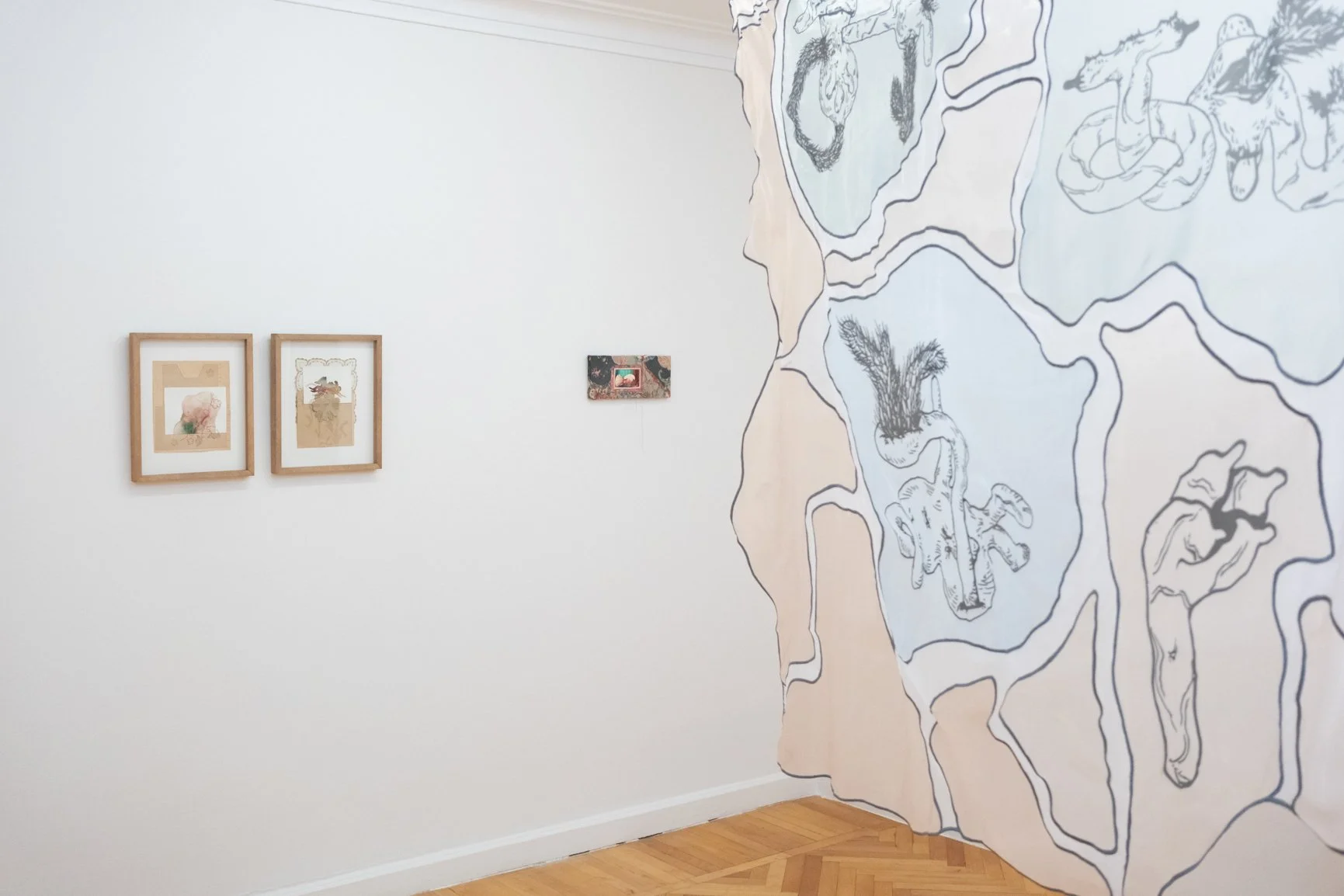
Gypsum is pleased to present Z for Zarafa, the first solo exhibition by Egyptian-Lebanese artist Lara Baladi at the gallery. Emerging from Anatomy of Revolution, her monumental web-based ABC of global protests (2019–ongoing,) the exhibition unfolds through a new body of work spanning tapestry, photography, and sculptural installation. For Baladi, the letter Z (“Zain” in Arabic) becomes an entry point into intertwined histories of migration, diplomatic exchange, and revolutions.

In Baladi’s sprawling alphabet, the letter Z stands for many words, including “Zarafa,” the giraffe gifted by Mohamed Ali to King Charles X of France in 1827. More than a diplomatic offering, Zarafa became a spectacle: a living emissary who traversed continents, empires, and imaginations. She sparked a cultural frenzy—hairstyles rose in imitation of her height, textiles echoed the markings of her coat, and her image proliferated across objects and decorative surfaces. For Baladi, however, Zarafa’s afterlife persists as both a diplomatic relic and a metaphor for displacement and forced migration.

The exhibition considers the absurdity of diplomatic exchange as an expression of persuasion and power. A monumental tapestry traces Zarafa’s journey from Sudan to Paris; a cabinet of curiosities gathers objects recalling bizarre ceremonial gifts exchanged between heads of state; scattered ceramic flies reference pharaonic medallions, a symbol of military achievement.

Beyond the political dimensions of cultural exchange, the works draw on biblical, contemporary, and personal stories of migration—stories embedded within the labor of making itself. Motifs from Noah’s Ark appear alongside a photograph of a foaming black sea, referencing the water as both passage and end, not just a route but a carrier of bodies, stories, and losses. For one tapestry, Baladi collaborated with Threads of Hope, an organization supporting marginalized Egyptian migrants, and refugee women. Through a series of workshops, participants translated their journey into drawings later incorporated into the artwork.

The exhibition is further contextualized within Anatomy of Revolution in the gallery’s viewing room, transformed into a classroom-like space where viewers can engage directly with its lexicon. Printed posters of another ABC primer rework the indoctrinating language of 1950s Arabic schoolbooks, while a school desk evokes both a site of learning and an operating table, where symbols of belonging to a nation, displacement and revolution, are dissected.

The exhibition emerges from a multi-year endeavor and through a wide network of collaborations, bringing together techniques and forms shaped by many hands: potters in Fayoum, blacksmiths in Imbaba, antiquaries in downtown Cairo, and embroiderers in Islamic Cairo, amongst others.

The exhibition is accompanied by The Anatomist, a publication co-produced by Gypsum and launched on the occasion of the exhibition. Its first issue is dedicated to the topic of migration broached through the story of Zarafa, bringing together newly commissioned texts on displacement, borders, exile, and return.

Lara Baladi (b.1969) is a Lebanese-Egyptian artist, archivist, writer and educator, recognized internationally for her multidisciplinary works. Her artistic practice spans photography, video, sculpture, architecture and multimedia installations. Driven by critical exploration of historical archives and popular visual culture, Baladi’s work examines the intersection of myth, memory, socio-political narratives, and the cyclical nature of history.

Read Lara Baladi’s full biography here


THE BESTIARY

A group show in collaboration with Sargent’s Daughters, NYC

Featuring work by Dina Danish, Huda Lutfi, Mohamed Monaiseer

15-30 May 2026

Gypsum is pleased to present a collaboration with Sargent’s Daughters in their lower-level space. The limited-run exhibition, titled The Bestiary, marks the gallery’s first exhibition in New York. This invitation grew out of conversations between the gallerists at Art Basel Qatar, where they discussed a shared desire to find new modes of working together across regions. As two women-led, critically rigorous programs, this exhibition allows both galleries to reflect on their shared relationships and values across different cultural contexts.

The Bestiary brings together three Egyptian artists from Gypsum’s roster whose works reach into medieval craft histories—appliqué, Islamic illuminated manuscripts, and heraldic symbolism—to reflect on contemporary personal, historical, and political narratives. Rooted in the materiality of these traditions, the work of Dina Danish, Huda Lutfi, and Mohamed Monaiseer traces the ways systems of power are built, broken, and endured.